|
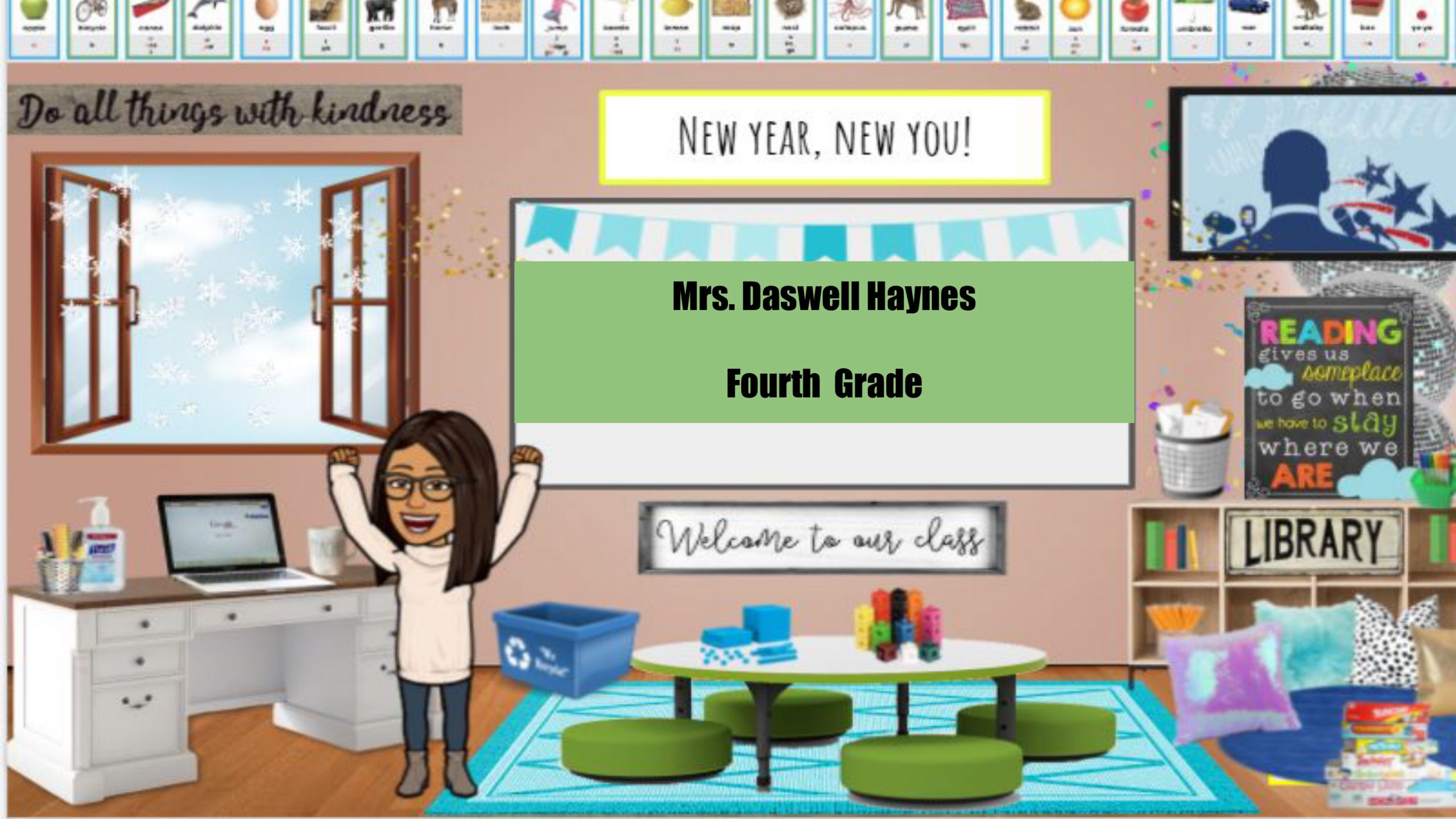
Nicola Daswell Haynes |
Transcript
Nicola Daswell Haynes, my passion for teaching.
My enthusiasm for teaching stems from my love for my students. This motivates me to instill a passion for learning in all those entrusted in my care since education is the vehicle that will drive them to achievement. It is, therefore, best that teachers instill a love of learning in students. Walden University, (2019c). Voices from the field. As I listened to my colleagues, I understood that we all have the same desire to see the nation’s children maximize their full potential and have a positive impact on society in the future.
The function of the teacher in today’s learning environment.
Some teachers tend to enjoy working with students who comprehend new topics quickly and do their assignments on time, however, the students who are the most disruptive and disengaged are generally the ones that require the most attention, which sometimes is overlooked. Academic progress can begin once the trust in the relationship has been built, which may take some time. In order to meet the needs of all my students, I will constantly seek new knowledge and pedagogical approaches to cater to all students. Teachers have numerous roles to fill in order to run an effective classroom. Therefore as educators, a lot is expected from us. Walden University, (2019d). Voices from the field.
The National Board of Professionals’ criteria matched my zeal for education. As a teacher, I am dedicated to the profession, and my students fuel my passion over the years and will continue to do so.
I thank you.
Diagnostic Results
Nicola Daswell Haynes
Master of Science in Education, Walden University
EDUC 6610
Dr. JoAnn P. Susko
March 13, 2022
Diagnostic result
The diagnostic quiz result shows 80% in Introduction to scholarly writing, 80% in Introduction to paragraphs, 80% in Paragraph transitions, and 40% in Evidence and analysis. In areas where I obtained 80%, there is room for improvement. With this improvement, I hope to solidify my understanding of the various topics. In Evidence and analysis, it was strongly recommended, that I complete the module. Upon completion of the module, I should be able to analyze evidence more critically, thus, being more effective in my field.
A hundred percent shows in Using & formatting APA Heading, 67% in Introduction to APA, 67% Avoiding bias, 33 % Emphasis & specification, 33% in Numbers and list, and 0% in clarifying the actor. Based on the result, my area of strength is in Using & formatting APA Heading, where I gained 100%. The other areas show that there is much room for improvement. With the completion of the model, my post quiz shows significant improvement.
The diagnostic test on the Importance of avoiding plagiarism shows 75%, Citing quotes 50%, Citing paragraphs 75%, and 25% on Citation frequency.
The impact of scholarly writing on my journey
Scholarly writing is also known as academic writing. It is the genre of writing used in all academic fields. (Walden University Library. n .d.). Scholarly writing is a skill that needs to be acquired as an educator in order to be a successful writer. Knowing my strengths and weaknesses from the diagnostic quiz will enable me to identify areas that need to be developed and improved. Understanding the various techniques and being able to construct some form of structure for my writing will enhance my writing skills. When I was first introduced to scholarly writing, I assumed that writing skill is an unreachable objective; however, after starting learning about it, I acknowledged that with sufficient effort, anyone can master it. With continuous practice, I will be better able to analyze, convey understanding, think critically, and focus on the techniques and styles that are required in order to be more of an effective writer. (Walden University Library. n.d).
References
Walden University. (n.d.). Using evidence over view
https://academicguides.waldenu.edu/writingcenter/evidence
Walden University Library. (n.d.). The scholarly writing over view
https://academicguides.waldenu.edu/writingcenter/scholarly
Walden University Writing Center. (n.d.). Modules: Scholarly Writing Modules:
https://academicguides.waldenu.edu/writingcenter/modules/scholarlywriting
Walden University Writing Center. (n.d.). Modules: APA Style
https://academicguides.waldenu.edu/writingcenter/modules/apa/style
<<Click here for information on Professional Proficiencies, Standard & Disposition>>
Education professional profile
Professional educators, according to (Meador. D. 2019) are those who have a thorough knowledge of the subjects they teach and adhere to the intellectual demands of their disciplines. To be able to assess the needs of the students they are in charge of, know the standards of practice of the profession, and are aware of the responsibility for satisfying the students’ needs This definition along with my philosophy which is, be that mirror that reflects that of your classroom is what I use to guide my teaching profession in my classroom, the school, the district and in the wider society.
It is critical to establish and maintain respectful and constructive relationships with key stakeholders. (Meador 2019). As an educator who serves as a role model and authority figure for my students, I strive to be honest and trustworthy at all times. It is critical that I treat all students without bias or partiality. Similarly, my professional relationships with coworkers and administrators are critical. I ensure to treat everyone with dignity. Personal appearance and appropriate attire are also important aspects of professionalism. It encompasses how you communicate and act both within and outside of the classroom. As a result, I attempt to present myself in a professional manner to demonstrate a level of respect for myself and my students.
Earning my MS in Education demonstrate my passion to teach because this is creating an avenue to improve my teaching skills, Learning new knowledge and gaining new experience will not only strengthen my knowledge of the subject I intend to teach, but this will help me to gain new strategies and new ways of doing things that caters to the 21st century learner.
According to the National Board for Professional Teaching Standards (2016), it is of great importance that “Teachers think systematically about their practice and learn from their experience” (p. 30) and that “Teachers are members of learning communities” (p. 34). Hence as educators it is imperative that teachers see themselves as lifelong learners.
National Board for Professional Teaching Standards. (2016). What teachers should know and be able to do (2nd ed.). http://accomplishedteacher.org/wp-content/uploads/2016/12/NBPTS-What-Teachers-Should-Know-and-Be-Able-to-Do-.pdf
(Meador., D. 2019). Maintaining professionalism
https://www.thoughtco.com/the-importance-of-maintaining-professionalism-in-schools-3194680
The educational climate, as well as the learning environment, is always changing. As a result, in order to stay up with the ever-changing teaching and learning process, educators must constantly enhance their teaching concepts and approaches. If one’s passion, commitment, and dedication are not in the teaching profession, this might be overwhelming. Despite the many problems, our school remains focused on our students.
At our school, despite the changes in leadership and the stress of getting students to pass state tests and show growth, we work together to educate all learners and make a difference in their lives. According to Ginley, M. (2011). Kids are far more than test scores, and despite every other role like a nurse, counselor, parent, and discipline coach, educators work tirelessly to give students an educational experience that will both challenge and engage them academically while also cultivating their drive for success. With the limited time to form small groups and to cover core instructions, educators are challenged with the task to teach all learners to be productive, competitive, and successful citizens. This is what our vision and mission are based upon. Our school’s objective is to ensure and deliver an innovative, responsive, and safe learning environment that prepares and engages all students despite the challenges.
The NC Standard Course of Study is followed at our institution. This gives each grade level a set of requirements for each content area. The goal is to establish tough academic performance criteria for students that are uniform, not only within our school system but also across the state. To assist our efforts to give students engaging, difficult, and rigorous work; our school has adopted a learning-focused framework. This paradigm promotes high standards, good instruction, and continuous improvement for all students. In our classrooms, students will receive a standards-based curriculum that includes exemplary practices that require critical thinking. Because of the epidemic, the majority of students are three to four grade levels behind. With this challenge, educators needed to be creative and imaginative to guarantee that all students had tailored and scaffolded learning experiences. This leads to the development of Flexi grouping from second to fifth grade. At the start of the school year, Lions Pride Time was also established, with 30 minutes of teaching offered each day after students arrived to assist those who were two or three grade levels behind. Teachers used this time to examine data and create lessons for each student based on their different levels of competence. Educators had so much more to do with limited time, as several educators remarked in the Voices in the field.
Teaching has always been a lifelong passion for me; it is both my calling and my mission. Teachers were created to make a difference in the world, and I believe myself to be one of them. I educate so that I may envision my students as successful members of society, who will have a positive impact on the future.
Reference
Walden University, LLC. (2019). Voices from the field: The role of the teacher
https://cdn-media.waldenu.edu/2dett4d/Walden/MSED/PROG/VoicesFromTheField/index.html
Ginley. M. (2014). Kids are far more than a test score or why I continue to teach in spite of
it all. In S. Nieto. Ed). Why we teach now (pp. 23-35). Teachers College Press.
Why teachers quit and why teachers stay in the profession
Changes in how teachers think about teaching and how students learn are required in today’s educational climate and learning environment. How teachers educate, how children learn, and how families and communities work with schools for the benefit of students all contribute to the educational atmosphere (Mulvahill, E.2019.).
There are many factors that contribute to why teachers lose their zeal and passion for the teaching profession within five years. These factors include but are not limited to the challenging workplace conditions where the buildings are in disrepair, a scarcity of essential teaching resources, big class sizes, and high expectations which teachers find very discouraging.
Secondly, the lack of support for beginning teachers in particular, without the necessary support, new teachers can be especially stressed, thus resulting in them leaving the profession after their first-year experience. Thirdly, the overwhelming Stress, according to a national survey, 58 percent of teachers say their mental health is “not good.” Another poll found that nearly two-thirds of workers believe their jobs are “always” or “often” stressful. Another factor is the lack of respect, many teachers are affected by what they perceive to be a lack of respect. It is of paramount importance that all stakeholders understand the level of respect that is required by each person. Next is discipline issues, teachers spend far too much time disciplining students when they should be focusing on the content of the lesson and helping students to reach their mastery level. Finally, data collection and testing, the pressures that teachers face as a result of the testing and data collection can be overwhelming ((Mulvahill, E.2019).
Despite the many challenges, there are some teachers that refused to leave the teaching profession, and some reasons why they stay include, having a community that is supportive. Teachers feel respected, wanted, and driven in a supportive community, which encourages them to stay in the profession. (Inman et al., 2004.) Another reason is getting the support from administration. Administrators need to empower their teachers, treat them as professionals, and encourage them to collaborate with others in order to learn and reflect. Teachers, students, and parents must respect and be respected by them. Finally, professional development, continuing teacher education enable educators to seek out effective teaching approaches that boost morale, hence improving school culture (Brown, B.2016).
Teaching has always been my passion, this profession is indeed my calling and my purpose. God created teachers to make a difference in the word and I consider myself as one of those teachers. I teach so that I will see my students in the future as successful adults who will impact society in positive ways. I see teaching as not just a job, but a passion to ignite and inspire the love for learning in the hearts of all students, and finally, I teach to educate myself so that I can effectively educate those young minds entrusted in my care.
As an educator, I strongly believe that this profession balances the universe because educators make all professions possible, we, therefore, need to guide students as they plan, for the future generation to come.
References
The Voices in the Field Retrieved From
https://cdn-media.waldenu.edu/2dett4d/Walden/MSED/PROG/VoicesFromTheField/index.html
(Mulvahill, E. 2019) .Why do teachers quit? Retrieved from:
https://www.weareteachers.com/why-teachers-quit/
(Nieto, S. 2014). Why we teach now: Teachers college press
Synchronous Discussion
Nicola Daswell Haynes
Master of Science Education, Walden University
EDUC 6610
Dr. JoAnn P. Susko
March 29, 2022
On Monday, March 28, 2022, at 7:00 p.m., we held our Synchronous Discussion Meeting. The primary goal of this gathering was to promote collaboration and interaction, as well as to discuss why teachers stay in the profession and why some teachers leave.
My colleagues and I discussed why teachers stay in the profession, and the main reason was the love and passion for students, as well as the sense of accomplishment that comes from being able to positively impact students’ educational journeys and see how they may change society. The lack of support within the educational system was one of the key factors addressed as to why teachers leave the profession. One teacher described how she had to leave her profession because of a lack of support, however later she was able to apply for a job at another school with the intention that things would be better. COVID was also brought up, and teachers were invited to discuss how they dealt with it. Many teachers say they were able to cope by working together with the administration and their peers. During the epidemic, a teacher vividly described how things at her school became incredibly difficult because some students did not have access to technological devices and were forced to do work on paper, with the majority of students failing to return their assignments. In my district, though, every student was given an electronic device, and measures were put in place to combat any challenges that could be foreseen.
Finally, everyone was asked to share one sentence of advice they would give to someone just entering the profession. Everyone shared something positive, and my philosophy, as always, is to stay committed and dedicated to your calling in this noble profession, which is common to the majority of my colleagues and that is one insight that will always guide my future in this field.
Teaching has always been a lifelong passion for me, I can vividly recall from a tender age growing up I usually dressed up as a teacher and teach the trees and rocks. Teaching is both my calling and my mission. The love and passion I have for this profession help me make a difference in the lives of the students I meet on a daily basis. Every day I wake up with new energy to educate as I envision my students as successful people who will have a beneficial impact on society in the future. I try to create a love of learning in all students’ hearts, as I know education is the vehicle that will lead them to success.
In today’s learning environment, teachers’ function is more of a facilitator. (Summers, A., Voices from the Field) Instead of lecturing students who sit in rows at desks, obediently listening and recording what they hear, teachers provide each child with a rich, fulfilling, and individual learning experience. Students in today’s learning environment are more engaged learners, instead of whole group instruction teachers are more focused on small groups and differentiated lessons. The educational environment does not stop in the classroom; it also extends to the home, the community, and the rest of the world. Information isn’t confined to books; it can be found anywhere and is easily accessible. Students can take charge of their own learning.
The five core prepositions have become foundational to all I do in and out of the classroom. I like how they are all intertwined; each one is related to the others. As a teacher dedicated to my students’ learning, I must be knowledgeable in the areas I teach, responsible for managing and monitoring students’ progress, think methodically about their practice, and learn from their mistakes, as well as to be a part of the learning community. As a teacher, I can be productive and effective if I follow these concepts.
Teaching for me is far more than knowing about the educational topic, making systematic plans, and instructing students. As an educator, I must exhibit professional attitudes and behavior that aid student learning while also projecting a positive picture of the teaching profession. Professional dispositions refer to certain attitudes and behaviors, these are the values, actions, attitudes, and beliefs that guide my interactions with students, families, community members, and professional colleagues in my field. Professional dispositions are an important part of teacher training and are expected to guide my role as an educator.
References
National Board for Professional Teaching Standard. (n.d.). Five core propositions. Retrieved from:
https://www.nbpts.org/certification/five-core-propostions/
Walden University, LLC. (2019). Voices from the Field: The role of the teacher (video). Retrieved from:
https://cdn-media.waldenu.edu/2dett4d/Walden/MSED/PROG/VoicesFromTheField/index.html
RWRCOEL Professional Dispositions (PDF) Retrieved from:
https://content.waldenu.edu/59c52f6d4b6b96ee07ecfa10c2002276.pdf
Purdue University: Education professional dispositions in education. Retrieved from:
https://online.purdue.edu/blog/education/dispositions
Teacher as Professional
Nicola Daswell Haynes
Master in Education, Walden University
EDUC 6610
Dr. JoAnn P. Susko
March 29, 2022
Journal Reflection
(Mattos et al., 2013). Professional learning communities are an excellent technique for improving teaching and learning, thus, providing a relevant working and learning environment for students and teachers. It is to promote teachers’ professionalism and well-being, as well as to transform the culture of the school. This is applicable to the Professional learning communities at my school where the main objective is to discuss data and intentionally plan instruction for each student by differentiation and small group learning. PLC is done weekly with every grade level teacher and lasts for 30 minutes. This has created a positive teaching and learning environment at my school for all teachers. Positive school culture, as stated in the article, is favorable to professional happiness, effectiveness, and morale, as well as creating an environment that maximizes student learning and fosters collegiality and collaboration. Establishing a positive school culture is crucial in implementing PLC, as school culture has a significant impact on preparedness for change and the ability of schools to build a professionally collaborative culture (Fullan, 2001). This has a favorable impact on the learning of students.
As stated in the article (Bryk et al. 1999), principals play a critical role in cultivating a climate that encourages innovative professional activities, and they must offer time and resources for it to be effective. Time and resources are without a doubt, critical issues that pose the greatest obstacles to PLC. (Hord & Sommers, 2008). These concerns can become difficult if the principal cannot understand how PLC can be scheduled during regular school hours. Another issue that can arise is if the resource person who is conducting the PLCs is unavailable due to other commitments, and finally, in terms of resources, the unavailability of space could also be a challenge.
Reference
Antinluoma, M., et.al. (2018). Schools as professional learning communities. Journal of Education and Learning Retrieved From:
file:///C:/Users/nicol/Downloads/Schools%20as%20Professional%20Learning%20Communities%20Antinluoma%20et%20al%202020.pdf
Teacher as Professional
Nicola Daswell Haynes
Master in Education, Walden University
EDUC 6610
Dr. JoAnn P. Susko
April 5, 2022
Social-emotional learning plays a critical role in our school, The NC Social and Emotional Learning (SEL) Implementation Team listened to young people and adults across the state to develop the following vision for SEL in North Carolina public schools. At my school, we strongly encourage a safe, productive, restorative, and pleasurable learning environments in which each student, staff member, and family member is respected and has a feeling of belonging. Through healthy interactions and compassionate adult modeling, our schools deliver equitable academic, social, emotional, and behavioral learning in collaboration with families and communities. We the staff value our own social and emotional growth as a form of self-care, care for colleagues, and care for students since we are part of a supportive system. Students who graduate from the same supportive system are empowered to solve problems, communicate effectively, sympathize with others, and pursue goals for further education, career, and community service.
The area for improvement would be that of self-care, sharpening the Saw entails keeping and strengthening your most valuable asset: yourself. One can produce development and transformation in one’s own life as one rejuvenates oneself. Covey, S. (2022). Sharpen the Saw helps you stay in shape so you can keep up with the other six habits. You improve your ability to perform and deal with the problems that come your way as well as better care for the students entrusted in your care.
Setting professional goals, cultivating a growth mindset, and maintaining personal well-being are all critical components of reaching any objective. People with a growth mindset are more willing to take on challenges and learn new things because they perceive them as stepping stones to success and personal development.
We experience higher levels of health, personal fulfillment, and happiness when we create objectives and take action that is connected with what is most important to us. A growth mindset is a concept that with time and effort, you can learn, develop, and improve.
Dweck, C. (2016) a psychology professor at Stanford University, describes Growth Mindset as the notion that one’s abilities, traits, and intelligence can be improved. I strongly believe that I have a growth mindset with regard to my professional goals and aspirations and my reasons for believing this is because, I continue to improve, grow, learn, and adapt, just as I teach students to do. It is critical for me to never stop growing and learning, no matter how old I am or how skilled I think I am at my profession. Even the best educators are always on the search for potential ideas, approaches, and ways of thinking that will help them better serve their students. To succeed in an emerging global economy, many schools are encouraging children to be young innovators, makers, and design-thinkers. This, therefore, means that educators should try new things and experiment to provide dynamic, real, and effective learning because there is no one-size-fits-all approach to teaching. Finally, the urge for students to be adaptable and flexible partners is part of the attempt to educate 21st-century skills. To continue to improve as teachers, we must be willing to adjust our practices to the needs and best interests of our students, as well as find a way to include our colleagues’ views and contributions. Shaw, G. (2022). Those who cannot change their minds cannot change anything, therefore to have a growth mindset I have to be willing to accept changes.
References
NC Social and emotional learning Retrieved from:
https://www.dpi.nc.gov/districts-schools/districts-schools-support/nc-social-and-emotional-learning
Gunn, J. (n.d.). Building of growth mindset for teachers. Resilient educators. Retrieved From:
https://resilienteducator.com/classroom-resources/growth-mindset-for-teachers/
Trach, E. (2018, September 18). Setting professional development goals and tracking your progress. Retrieved From:
https://www.schoology.com/blog/setting-professional-development-goals-and-tracking-your-progress
FranklinConvey.com (2019). Habit 7: Sharpened the saw. Retrieved From:
https://www.franklincovey.com/habit-7/
Education and personal change. (2016, September 29). 7 habits of highly effective teachers. Retrieved From:
Module 6- Journal Reflection
Nicola Daswell Haynes
Master of Science in Education, Walden University
EDUC 6610J-12-Teacher as Professional
Dr. JoAnn P. Susko
April 12, 2022
My definition of social change is people coming together to execute new ideas, methods, and tactics, and to enhance the lives of others thus making the world a better place. This definition of social change is similar to Walden University’s mission statement in that both statements aim to provide people with the necessary knowledge, skills, and mindset to improve their lives and contribute positively to their environment and society. Walden University (2017). My concept is also aligned with the purpose of Walden University’s vision because both aspire to train individuals to be critical of societal concerns and thereby improve the greater good. Social change can be done in two ways, the revolutionary change which is a sudden change that people adapt to, and evolutionary change, which is a gradual change that people adapt to through time. All social change models use one of two approaches: they try to modify a situation over time or they try to improve things rapidly. Walden University Resources Article (2022).
One can improve our world and people’s lives through social change, hence the necessity for positive social is critical. Although one may not be able to change the world, one can begin by making little changes in one’s own surroundings, such as at home, school, church, or work, which will eventually spread to the larger community.
I feel empowered to lead the needs for social change in my school setting. Schools facilitate the process of social change and a lot of emphasis is placed on schools to bring about positive social change. Children gain social skills in school, through interactions with teachers and other students. They learn how to relate to others of various personality types, work through conflicts, solve problems and practice self-control. Morris, J., (2017). However, not every child learns or develops all of these skills at the same rate, and some children may have anti-social inclinations as a result of life events that make them resistant to socializing. Education instills in students the understanding that their actions and decisions have repercussions. All of these factors have an impact on an individual as well as the wider society. As an educator who is a channel of change, I feel empowered daily to bring about positive change in my students. Knowing the impact I have on students, I have to play a critical role in model and reflecting on the positive change that I envision for my students. I also feel that it is my responsibility to help those students entrusted in my care to acquire the necessary skills they will need to bring about a positive change.
References
Walden University (2017). Walden 2020: A vision for social change Retrieved From:
Walden University. (n.d.). Social change. Retrieved From:
https://www.waldenu.edu/why-walden/social-change
Walden University. (n.d.a.). 5 things that everyone should know about social change. Retrieved From:
Morris, J., (2017). Education and positive change, Retrieved From:
Module 7 Team Assignment
Digital Citizenship (Group A)
Master of Science in Education, Walden University
EDUC 6610J-12: Teacher as Professional
Dr. JoAnn P. Susko
April 24, 2022
Group Members and Their Roles
The five members of Digital Citizenship Group A and their roles are:
Tamsyn Allen-Virgo – presenting on digital access, digital communication, and
compiling the ADA compliant transcripts for our video presentation.
Ayisha Bellot – presenting on digital literacy, digital wellness, and the introduction
of our video presentation.
Camille Camire – presenting on digital security, digital law, and the editing and
formatting of our video presentation.
Nicola Daswell-Haynes – presenting on digital rights and responsibilities and digital commerce as well as the compilation of the references used by all
group members.
Valleen Grant – presenting on digital etiquette and creating the overview that will
accompany our video presentation.
Overview
The increasing dependence on technology in our daily lives requires us to adhere to norms and practices for safe and effective use of this vital tool. According to Issitt (2018), digital citizenship refers to the “norms and rules of behavior for persons who use technology in commerce, politics, and social communication” (Issitt, 2018). Similarly, Tangul and Soykan (2021) define digital citizenship as the correct and appropriate use of technology. As educators, “it is what and how we teach our students to interact with the online world” (Cole, 2019).
Our group was tasked with examining digital citizenship as an educational issue and presenting our findings creatively to a specific audience. We tailored our presentation to education stakeholders (students, parents, teachers, the community, and administrators). Digital citizenship is essential to education due to the increase in access to and use of technology by students. According to Cole (2019), if students do not know how to use their technology correctly, this will negatively impact their future. Additionally, as technology use increases, our dependence on the internet will, too (Zook, 2019).
Our presentation examines the nine elements of digital citizenship as identified by Ribble (2011). It will take the form of a video that will cater to the audio-visual learner and includes an ADA-compliant transcript. The aim of our presentation is not only to inform our stakeholders about the importance of digital citizenship, but to also ensure that responsible online behavior is practiced by all digital citizens.
ADA Compliant Transcript
Welcome to Digital Citizenship – Establishing good behavior in the digital world.
As educational stakeholders, “The digital age beckons us to usher in a new era of character education, aimed at directly addressing the opportunities and challenges of living a digital lifestyle” (Ohler, 2012).
Ribble, Bailey, and Ross (2004) defined Digital Citizenship as the norms and behavior governing technology use. These norms were categorized into three major topics: student learning and academic performance, student environment and behavior, and student life outside the school environment, which are further subdivided into nine issues that determine our roles as education stakeholders’ in raising good digital citizens (Ribble et al., 2004). Why is this important, you might ask? Well, if our educational village does not address these issues, the digital culture takes on a life of its own, leading to “problematic, even dangerous student behavior” (Hollandsworth et al., 2011). So, let’s learn more about these nine issues.
Digital access according to Bianco “is the ability to fully participate in the digital society”. To ensure that all students benefit and are able to participate fully, digital tools and devices, as well as access to the internet must be readily available to all students. Some of these digital tools and devices include computers, laptops, tablets amongst others. Technology is one of the current mediums through which people communicate and interact with each other. Due to this paradigm shift in the society, it filters into our education system and thus there is an increase in the use technology in our schools to enhance teaching and learning.
However, not every student has total access to the digital tools or have the knowledge of using many of these new devices correctly. Bianco refers to these issues that will affect students having access to digital resources as “digital divide”. She further states that digital divide exists due to several factors which include “lack of resources to pay for hardware, technology and internet access, lack of electricity, lack of education and knowledge about the use of technology and physical limitations that limit access”.
Teachers, school’s administrators and the school districts must be aware of these factors and think of creative ways of eliminating such problems to ensure technological equity in the classroom. To help cater to the technological needs of all students, school districts and administrators can partner with local and international businesses to provide digital devices to each student, so as to enhance learning.
What is digital communication? It is of utmost importance that the element of digital communication be understood. Ribble (2015) defines digital communication as communicating with others through electronic mode. As 21st century citizens, we communicate by sending emails, text messages, making video calls, and phone calls as well as using the various social media platforms which all enhance immediate access.
These forms of digital communication are commonly used by every entity globally today, including the education system. Most schools today use the social media platforms to communicate with parents, students, teachers, other stakeholders as well as the wider community. Schools have their own Twitter, Facebook and Instagram accounts. Students are even given a school email address through which teachers and school administrators communicate with the students and their parents. To enhance the teaching learning process, teacher have also integrated websites into their lessons so as to maximize students’ learning.
Digital literacy involves gaining knowledge and skills about technology and technological devices. It encompasses various “cognitive, motor, sociological, and emotional skills” that technology users must have to function effectively in the digital environment (Eshet, 2004). This is important to us as stakeholders. For example, teachers and students must have some level of digital competency to remain abreast with growing digital societies, and government leaders must foster e-learning experiences to educate the masses (Nawaz and Kundi, 2010).
Digital Security
The electronic precautions to guarantee safety (Ribble, 2015). Top concerns: Protecting personal information. Protect your passwords, don’t give out identifying information such as social security numbers, phone numbers, home addresses, and birth dates. Be aware that photos you take on a smartphone or tablet and then post can also contain information about your whereabouts. These photos often contain encrypted information such as dates, timestamps, and location. An online predator could use this to find what school a child attends, where they hang out, and who their friends are (Kooten, 2012). Keeping virus software and devices up to date. You can adjust your smartphone or tablet settings to update automatically.
What is Digital Etiquette?
These are the unspoken codes, customs and standards that govern our conduct in the digital world. More specifically, ‘netiquette’ as it is sometimes called, provides us with the proper rules and behavior for the use of technology and interacting with others while using our digital devices (Guerra, 2021). It is the digital equivalent of holding the door open or offering up your seat for someone (Adaptivist, 2021).
Why is Digital Etiquette Important?
According to Adaptivist (2021), “93 % of communication is non-verbal and 7 % is down to the words we use” (Adaptivist, 2021). If there are no rules in place, misunderstanding, misinterpretation and miscommunication will occur (Adaptivist, 2021).
Courtesy and respect online are just as important as in our face-to-face interactions.
Things to Know About Digital Etiquette and Manners
- You should always treat others how you wish to be treated. Private or sensitive matters should be discussed in private and not online.
- Never swear or use abusive language.
- Avoid digital drama. When we send instant messages or post statuses, they might be done ‘in the moment’ but last much longer than that. With the click of a button, it will be available for the world to see.
- Keep your messages positive and truthful. Remember, your words represent what you are thinking. Avoid posting gossip and rumours- anything that is not fact based should be avoided.
- Respect the privacy of others by not sharing videos, personal photos or other information that they might not want shared online.
- Finally, always say thank you to anyone who assists you online.
Digital rights and responsibilities
Digital rights and responsibilities relate to people’s liberties in both the digital and physical world. Everyone has the right to their thoughts and opinions, but ensuring that students and all other stakeholders use technology properly is an important component of digital citizenship in order for them to continue to have access to it.
The online world has its own set of rules, and each user has its own set of rights and obligations. The internet can be exploited for malicious purposes, and everyone should be protected from cyberbullying. Students must be held accountable for their behavior, and any misconduct in their virtual environment. It is critical that administration, teachers, students, and parents understand their online rights and obligations in order for everyone to feel safe and secure.
Digital Law
The electronic responsibility for actions and deeds (Ribble, 2015). Top concerns: Plagiarism: the practice of taking someone else’s work or ideas and passing them off as one’s own. While plagiarism is not a criminal or civil offense, severe consequences are still a possibility for those who plagiarize the intellectual property of others including but not limited to: failing a class assignment, loss of credits, academic probation, expulsion from school, college, or a university program (Marrow, 2014).
Cyber Bullying: the use of electronic communication to bully a person, typically by sending messages of an intimidating or threatening nature. Cyberbullying alone is not a criminal activity but can easily become a crime when the following occurs, physical assault, harassment especially if the harassment is based on gender or racism. Violence or death threats, making obscene and harassing phone calls and texts. Cyberstalking, posting of compromising photos, and extortion. Even without becoming criminal activity cyberbullying can lead to severe consequences within a school system such as loss of privileges, suspension, and expulsion from school (When Cyberbullying becomes a crime, n.d.).
Illegal Downloading/Sharing of copyrighted material: Any material that was not legally purchased or obtained through a legal manner. Illegal downloading can lead to being fined. Students should consider using school-sanctioned resources such as an online library or paid-for streaming services (Ribble, 2015).
Sexting/Child Pornography: Sexting is the sending and receiving sexually explicit messages, photos, or videos. Sexting is particularly problematic for young teens. The sender of nude or semi-nude photos/videos of a minor, even if the minor is also the sender, can be criminally charged with distribution of child pornography. The receiver of such explicit content of the minor, regardless of whether they solicit the content or not, can be criminally charged with possession of child pornography (Ribble, 2015).
Digital wellness involves using “media more mindfully and (getting) a lot more enjoyment … online” (University of Washington, n.d.). It is intertwined with many health aspects of our lives, such that poor digital wellness can lead to poor health overall (Kraft, n.d.). This should be of great concern to all stakeholders, as Dr. Price-Mitchell (2018) warns of the physical and psychological harm caused by the abuse of technology by both children and adults.
Digital Commerce
The digital commerce refers to the purchasing and selling of goods over the internet. These could be tangible objects or knowledge gained through classes. This is a critical point to convey to all stakeholders including parents and students because it may influence their future career choices or other online business (Cole K., 2019). The importance of addressing security concerns related to the use of money in the digital age is highlighted by digital commerce. In the classroom, technology is also used to teach students about the numerous job options that they may pursue in the future. Understanding how e-commerce works are essential for students and all other stakeholders.
References
Adaptivist. (2021). Digital etiquette. Retrieved from
https://www.adaptavist.com/ebooks-white-papers/digital-etiquette
Bauman, S. (2007) Cyberbullying: A virtual menace. Retrieved from
https://www.researchgate.net/publication/265937264_Cyberbullying_a_Virtual_Menace
Bianco, L. (n.d.). Digital citizenship. What do it mean to have digital access? Retrieved from
http://laurabiancoedtech.weebly.com/digital-access.html#.
Cole, K. (2019, June 7). Digital citizenship: elements, lessons, and importance. Schoology. Retrieved April 4, 2022 from https://www.schoology.com/blog/digital-citizenship-elements-lessons-and-importance-0
Cypher Learning. (n.d.). The 9 elements of digital citizenship your students should know. LMS for Schools and Universities. Retrieved from
https://www.neolms.com/info/the_9_elements_of_digital_citizenship_your_students_need_to_know
Dalian American International School. (n.d.). LibGuides: Digital Citizenship: Digital Etiquette. Retrieved from https://daischina.libguides.com/digitalcitizenship/digitaletiquette
Eshet ,Y. (2004). Digital literacy: A conceptual framework for survival skills in the digital era. In LearnTechLib. Retrieved from https://www.learntechlib.org/p/4793/
Guerra, E. (2020, May 29). Digital etiquette. Academy of our lady of mount carmel.
Retrieved from https://academyolmc.org/digital-etiquette/#:%7E:text=Dig
Hollandsworth, R., Dowdy, L., & Donovan, J. (2011, May 27). Digital citizenship in K-12: It takes a village. Retrieved from
https://link.springer.com/article/10.1007/s11528-011-0510-z
Isman, A., & Canan Gungoren, O. (2014, January). Digital citizenship. Retrieved from
https://eric.ed.gov/?id=EJ1018088
Issitt, M. L. (2018). Digital Citizenship. Salem Press Encyclopedia of Science.
Kooten, V. (2012). Be cyber safe (and smart). Boys’ life, 102(6), 30–33.
Kraft, H. (n.d.). Definition of Digital Health and Wellness. In Better You. Retrieved from https://www.betteryou.ai/definition-of-digital-health-and-wellness/
Morrow, S. (2014, September 13). Plagiarism: What is it, exactly? Legal zoom. Retrieved
April 13, 2022, Retrieved from
https://www.legalzoom.com/articles/plagiarism-what-is-it-exactly#:~:text=Legal%20Ramifications%20of%20Plagiarism,federal%20court%20for%20copyright%20violation
Nawaz, A., & Muhammad Kundi, G. (2010, July 31). Digital literacy: An analysis of the
contemporary paradigms. In science and education technology research. Retrieved from https://academicjournals.org/journal/IJSTER/article-abstract/68579321822
Ohler, J. (2011) Digital citizenship means character education for the digital age, Kappa Delta Pi Record, 47:sup1, 25-27, DOI: 10.1080/00228958.2011.10516720
Price-Mitchell, M. (2018, May 16). Digital Health and Wellness for 21st Century Families. In Roots of Action. Retrieved from https://www.rootsofaction.com/digital-health-families/
Ribble, M. (2011). Nine elements. Digital citizenship.
Retrieved from https://www.digitalcitizenship.net/nine-elements.html
Ribble, M. (2015). Digital citizenship in schools. Nine elements all students should know. Retrieved from https://ebookcentral.proquest.com/lib/waldenu/reader.action?docID=4395774
Ribble, M. S., Bailey, G. D., & Ross, T. W. (2004, September). Digital Citizenship: Addressing Appropriate Technology Behavior. In Eric. Retrieved from https://eric.ed.gov/?id=EJ695788
Tangül, H., & Soykan, E. (2021). Comparison of students’ and teachers’ opinions toward digital citizenship education. Frontiers in Psychology, 12. https://doi.org/10.3389/fpsyg.2021.752059
University of Washington. (n.d.). Digital Wellness 101: Taking Control of Your Life Online. In Student Life. Retrieved from https://www.washington.edu/studentlife/digital-wellness-101-sr/
What is Digital Citizenship (2021). Retrieved from
https://www.risevision.com/blog/what-is-digital-citizenship
When bullying and cyberbullying become a crime. Is bullying a crime? When bullying and
cyberbullying become a crime. (n.d.). Retrieved April 13, 2022, from
https://www.stompoutbullying.org/bullying-cyberbullying-crime
Zook, C. (2019, March 24). What is digital citizenship & how do you teach it?
Applied- Educational-Systems. Retrieved April 9, 2022, from
https://www.aeseducation.com/blog/what-is-digital-citizenship
In today’s educational society, it’s critical to join professional learning communities and pursue professional learning opportunities to ensure that our students and we as educators continue to progress (Gates, 2018). Collaborating with my colleagues to complete group projects and responding to posts made by my colleagues is one of the designed elements of this course that will help me to implement more diverse strategies in my classroom. According to (Gillies & Boyle, 2010) teachers have difficulties when planning collaborative activities, such as creating appropriate group projects, forming groups, managing class time, and enhancing and monitoring fruitful collaboration. Collaborative learning is a teaching style in which students of varied abilities collaborate in small groups to achieve a common goal (Gokhale, 1995). Collaboration among teachers also impacts student progress and allows us as educators to venture into new areas so we can better assist our students.
To implement collaboration among students in my school, I will focus more activities on project-based learning. Project-based learning can be a useful technique for encouraging students to become more engaged and responsible for their learning. Every day, students require demanding learning experiences and expectations. Because of the way projects are ordered, Project-Based Learning is suitable for achieving these needs. Students define and relate key knowledge and skills to answer the initial query in projects that begin with an application-based assignment or question. Through a project-based question or activity, students learn how to identify, describe, relate, and apply information (McDowell, 2020).
Using collaborative learning in my classroom will significantly impact the teaching and learning process in a positive way. According to (Mosley, et al., 2016), collaborative learning improves students’ critical thinking and problem-solving skills. There are certain subjects viewed as challenging by some students, and with this mindset, they will fail before even attempting them. (Mosley, 2016). Allowing students to participate in collaborative learning can help them acquire confidence and develop an interest in more difficult subjects. I strongly believe, that integrating more collaborative learning in my classroom can indeed improve students’ confidence and self-esteem, while also developing higher-level thinking skills. Collaborative learning can significantly impact students learning by enhancing social and interpersonal skills. Group projects can improve the educational experience by developing students’ leadership abilities as students will learn how to work with a variety of learners.
References
Jeanine, M., Jaymeson, L. and Shannon, M., (2018). The Effects of Collaborative Grouping on Student Engagement from
https://sophia.stkate.edu/maed/280
Gates, S. (2018). Benefits of collaboration, from
https://www.nea.org/professional-excellence/student-engagement/tools-tips/benefits-collaboration
Gokhale, A. (1995). Collaborative learning enhances critical thinking.
Journal of Technology Education, 7(1), from
http://scholar.lib.vt.edu/ejournals/JTE/v7n1/gokhale.jte-v7n1.html
Johnson, D, & Johnson, R. Introduction to Cooperative Learning. (2012) Cooperative Learning Institute, 10-14.
https://sophia.stkate.edu/cgi/viewcontent.cgi?referer=https://www.google.com/&httpsredir=1&article=1038&context=maed
McDowell, M, (2020 November 12,) Project-based learning, from
https://www.edutopia.org/article/3-keys-making-project-based-learning-work-during-distance-learning
The Professional Disposition is to provide professional conduct guidelines for educators in the teaching profession. The educator aims to earn the respect and trust of colleagues, students, parents and legal guardians, and the community, as well as to be a good role model.
I will continue to demonstrate my Professional Dispositions as a Walden Graduate Student as well as an education professional by continuing to display professional conduct, as outlined in Walden’s Code of Conduct, and the North Carolina Educators’ Code of Ethics, and exhibit ethical behavior as defined by Walden and North Carolina professional codes of ethics.
To demonstrate professional conduct, I will maintain an excellent record of timelines and attendance and expresses any absences or delays in fulfilling performance standards in advance. I will always be prepared for professional responsibilities and also adheres to deadlines. Evaluating and assigning grades to students based on their demonstrated competencies, and performance and ensuring students are disciplined in a just and equitable manner, with no intent to shame or humiliate them. I will refuse to accept significant gifts, favors, or additional compensation that might influence or appear to influence professional decisions or actions, except for professional reasons or in compliance with pertinent regulations or statutes. In addition, I will hold in confidence information learned in my professional practice regarding students and will divulge it only for professional reasons or in compliance with pertinent regulations or statutes (The State Board of Education, 1997).
To continue to demonstrate professional qualities, I will participate in professional development opportunities to maintain continuous learning and improve my professional practice. I will engage in ongoing critical reflection on personal performance to see areas that need to be developed or strengthened. I will advocate for the needs of others in terms of their social, emotional, physical, educational, behavioral, and fundamental requirements; as well as to encourage constructive societal change in order to improve educational opportunities and student learning. I will display culturally responsive techniques in order to foster an inclusive learning environment that recognizes and respects others’ cultures, values, and beliefs.
To continue to demonstrate collaboration, I will collaborate with colleagues not only from within my professional learning environment but with other educators globally in order to increase student learning and promote the teaching and learning profession by gaining new knowledge and skills as well as learning about new instructional and classroom management strategies. To create constructive social change, I will continue to collaborate with students, families, colleagues, and the community to strengthen partnerships and foster relationships with others.
Furthermore, I will employ effective verbal, nonverbal, and technological communication approaches to stimulate active inquiry, improve cooperation, and establish positive relationships in the classroom environment to continue to demonstrate communication. Be a person who listens actively and attentively to others and changes communication to meet the needs of individual students. Ensure that I transmit ideas in a variety of methods while maintaining a professional tone so that I will learn to recognize and appreciate others’ perspectives. In my conversations, makes others feel welcome, valued, and appreciated, and uses technological tools to promote communication in order to increase student learning and connections with others.
A growth mindset is a concept that, while everyone is different in terms of their initial performance, interests, talents, and skills, everyone can develop, change, and grow through application and experience. (Robinson, 2017). Providing chances for the teachers to create a growth mindset by working together to develop skills and methods to improve the effectiveness of instruction in the classroom is one of the most important school-based aspects of enhancing education today. (Dweck, 2016). It takes time and practice to learn how to encourage a growth attitude in students. Consistency is required to reinforce and show the concept that students may improve their abilities. According to (Dweck, 2016),
teachers must make a conscious effort to help students acquire a growth mindset.
By incorporating a growth mindset in my classroom setting, I would encourage my student’s participation in challenging activities. According to (Dweck, 2008) individuals with a growth mindset think that each struggle or mistake will lead to development and growth. Challenges should be shown as thrilling and engaging. Teaching students to overcome barriers is an important part of establishing a growth mindset. If a student says, “I’m not a good reader,” a simple qualification will be there is a method for improving your reading skills. (Yeager and Dweck, 2012) found students need a mindset that allows for facing those challenges when they feel as if they cannot do something. Students want to be encouraged that they have the ability to do something if they try hard enough. Helping students understand the concept that mistakes should be considered as opportunities to learn and therefore should not feel bad when they make mistakes is very important in helping them to develop a growth mindset. Next, setting attainable goals with students indicates the possibility of growth and improvement, when students are able to set goals and work towards achieving those goals can give them a feeling of self-satisfaction. Rather than celebrating an accomplishment. Establishing and maintaining a classroom atmosphere that values excellence and encourages students to maximize their full potential as they aspire to become productive citizens who can positively impact society is my ultimate goal in my field of education.
References
Laureate Education, Inc. (2016). RWRCOEL professional dispositions from
https://content.waldenu.edu/390c0924723dc502253f764a9c468bc3.pdf
The State Board of Education, (1997). From
https://www.dpi.nc.gov/media/55/open
Dweck, C. (2012). How growth mindsets can bear fruit in the classroom. Retrieved from:
https://www.psychologicalscience.org/observer/dweck-growth-mindsets
Dweck, C. S. (2016). To encourage a growth mindset, pass it on. Times Educational
https://nwcommons.nwciowa.edu/cgi/viewcontent.cgi?article=1114&context=education_masters
| My Five Elements of a Trusting Classroom |
|
· Teach – educate the learners so they will be in the know · Rehearse – practice the acceptable behavior · Reinforce – so that it becomes their daily routine · Remind – for the learners to constantly remember · Affirm – be consistent |
|
My Personal Philosophy for Classroom Management |
|
My personal philosophy for classroom management is, a culture of consistency produces better results. |
|
My Class-wide Expectations (Guidelines for Success, School-Wide Expectations) |
|
My classroom-wide expectations which are based on those of the school are, to be respectful- learners must be aware that they need to respect themselves as well as those around them.
Be responsible – learners need to know that they too have a part to play in caring for their things as well as the things within their environment.
|
| My Classroom Rules | ||||||
|
· Be respectful to yourself and others · Participate in-class activities · Work quietly without disturbing others. · Be on task · Be attentive and alert
|
|
My Attention Signal (getting the attention of the class without yelling) |
|
My attention signal is ‘Give me Five” · Eyes on the teacher · Listen · Hands to yourself · Quiet hand up · Use inside voices |
| My Correction Procedures (early warning signs of misbehavior): | |||||||||||||||||
|
My Procedures for Managing Student Work
Procedures for assigning homework:
Learners homework will be placed in their homework folder, which will be given on Monday to be returned on Friday. Students will sign to the date in which the homework was returned then place it in the designated basket.
|
Procedures for collecting completed work or homework:
|
|
Learners will be assigned tasks in their group, someone from the group will collect the work and place them on the top right hand corner of their desk. In most cases the teacher will collect students work to ensure work is completed before placing them in the tray for marking.
|
|
Procedures and policies for dealing with late or missing assignments:
|
|
The teacher will have a form to send home every two weeks to inform parents of any late/ missing assignment. This information will also communicate through Parent square.
|
|
Routine for making up a test or quiz
|
|
The routine for making up a test will be based on the standard of the school. |
|
My Encouragement Procedures (What will I do with my class to encourage productive student behavior?)
|
|
To encourage productive students behavior, points will be allotted on Class Dojo, learners will get to sit in the teacher’s chair, verbal award, learners will be given privileges, stickers, dip in the bag along with others.
|
Communication Expectations:
All Classroom Management Plans will be reviewed and practiced with students during the first 2 weeks of school. Elements will be posted in the classroom for students to see.